
Anthony Bandiero
Attorney and Senior Legal Instructor, Blue to Gold Law Enforcement Training
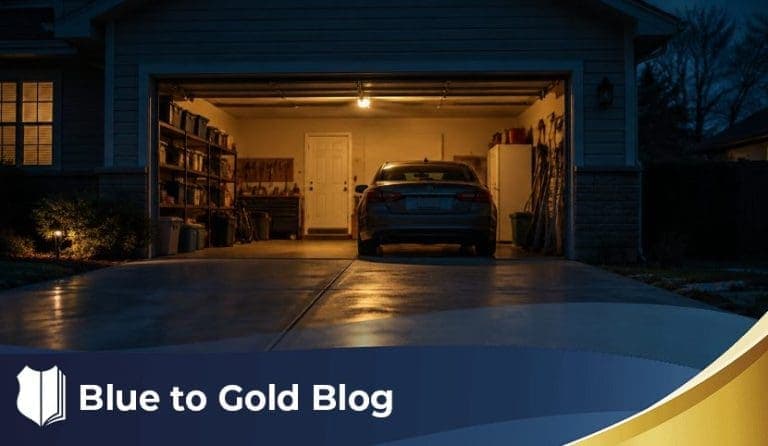
A pursuit of a reckless driver ends with the suspect parking inside his residential garage. Officers do a surround and call-out, arrest him, run a protective sweep, and find the car in the closed garage. The owner consented to the tow, but the officer wants to know what happens when the owner says no.
All right, can you tow a suspect’s vehicle from inside the garage?
Some background. I don’t know where this officer is from, but that’s okay. The background here is: we had an incident last week regarding a pursuit of a reckless driver. The driver was seen by multiple witnesses parking inside a residential garage. We conducted call-outs and eventually arrested the suspect. A protective sweep was conducted and the vehicle was found parked inside the closed garage. The owner gave us permission to tow the vehicle. However, the question is, if the owner did not give us permission to take the vehicle, would a warrant be the only way to tow the vehicle from the garage?
Great question. Let’s walk through it.
First, guys, my name is Anthony Bandiero, attorney and senior legal instructor for Blue to Gold Law Enforcement Training, doing a little roadside chat from Rapid City, South Dakota.
Is a surround and call-out the right move for a reckless driver?
First of all, we’ve got the call-out situation, and that has its own implications.
Generally speaking, when you surround a house and you call people out, you’re seizing the person under the Fourth Amendment, because they can no longer be free from government intrusion. So that’s fine. And it’s certainly easier to justify a surround and call-out than it is an entry into the home.
But if I was digging deep into this case, I would like to know, why are we actually doing a surround and call-out on a reckless driver? Just as a conversational point.
Obviously we’re good all day getting a warrant. We’re good all day trying to do a knock and talk and get this person to come out voluntarily. However, if they didn’t come out and they didn’t want to play ball, I’m just not a hundred percent convinced that doing a surround and call-out is the appropriate constitutional response.
Why was a protective sweep done at all?
The next thing the officer says is, then a protective sweep was conducted.
I’ve got alarm bells going off in my head left and right right now. Why are we even in the house? Why are we doing a protective sweep on a guy for reckless driving? I just don’t see it.
These facts are obviously just a paragraph, but I want everybody to think about what’s going on here. Protective sweeps, entering a home when you’re not even in the home in order to do a protective sweep, is a Fourth Amendment intrusion into the home. And we better have a reason that officers, or the public, or somebody in that house has a safety issue like right now.
We don’t get to go into a home just to make sure that we’re okay. Does that make sense? This is an intrusion.
So I would like to know what the officer would have articulated to the judge about why that protective sweep, that entry, was lawful. I have had plenty of people run from me and we found them at the house. Rarely can I think of a time when I’ve actually gone into the house to do a protective sweep for a drunk driver, reckless driver, and so forth.
So that’s the second concern that I have.
Can you seize a car you see in plain view in the garage?
Third, we saw the vehicle inside the closed garage. Let’s presume for argument’s sake that the court is cool with why the cops are in the house, that this is a lawful protective sweep. Now we see the vehicle. Can we take it without a warrant?
The answer is no. Well, I guess I said that too fast.
There could be an argument under plain view seizure. If you are lawfully present and you see contraband, evidence, fruits or instrumentalities of a crime in plain view, you are allowed to grab and go. So I guess that is a good argument.
I would just be very careful, because the U.S. Supreme Court kind of gave us a little pushback on seizing vehicles that were on curtilage. The facts there were a little different. That was Collins v. Virginia. That’s where the police had probable cause that the motorcycle was stolen. They see the motorcycle on the side yard, curtilage, went onto the curtilage, sees the motorcycle, and it gets suppressed. Because you can’t go onto people’s curtilage to simply seize evidence. You would need actual exigency, not just the motor vehicle exception.
So if in this state somehow that car is going to be seized under law, again, where I worked in Nevada we ain’t seizing cars for reckless driving. So I just have to ask, why are we seizing that vehicle?
Can you search the car once you have it?
And if we want to get into searching it, I definitely know we cannot search the vehicle. Because you would have to make another constitutional entry in order to grab that evidence, to go into a vehicle.
I don’t know how we get into what we were going to tell the judge about why we went into that vehicle for probable cause, and how is the vehicle evidence.
So my advice, if I was the lawyer on the phone with the cops asking me what should we do, I would be like, A, why are you trying to seize the vehicle? And B, okay, you sold me on that. If you can’t get consent, let’s go get a warrant.
The short version
- “When you surround a house and you call people out, you’re seizing the person under the Fourth Amendment.”
- “It’s certainly easier to justify a surround and call-out than it is an entry into the home.” But on a reckless driver, “I’m just not a hundred percent convinced that doing a surround and call-out is the appropriate constitutional response.”
- On the sweep: “Why are we doing a protective sweep on a guy for reckless driving? I just don’t see it.”
- “We don’t get to go into a home just to make sure that we’re okay. This is an intrusion.”
- Plain view seizure is “a good argument” if the entry was lawful, “but I would just be very careful.”
- Collins v. Virginia is the pushback. “You can’t go onto people’s curtilage to simply seize evidence. You would need actual exigency, not just the motor vehicle exception.”
- Seizing is one question, searching is another. “I definitely know we cannot search the vehicle.”
- “Why are you trying to seize the vehicle? And if you can’t get consent, let’s go get a warrant.”
Related from Blue to Gold
- Towing a Fleeing Suspect’s Car From a Driveway
- Can an Officer Enter a Garage Just to Close It?
- Searching Vehicles on Curtilage
This article is an edited transcript of Roadside Chat Ep. #282. It is legal training, not legal advice. Check your state law and your agency policy, because both can be more restrictive than the Fourth Amendment.